


There are many projects posted over the web which implement the excellent FastLED library on the ESP12 processor; however locating a project which implements this on the more powerful sibling is a lot more difficult.
So, with a few failed attempts and a lot of patching samples together; I have a stable running implementation which you can clone or fork to get up and running quickly with your own projects.
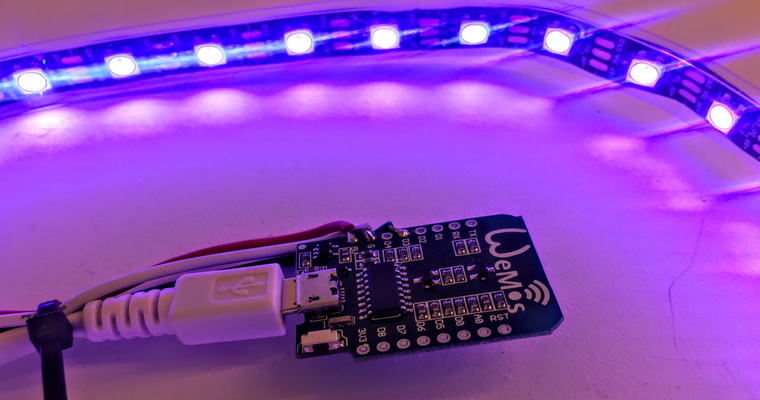
There are many projects posted over the web which implement the excellent FastLED library on the ESP12 processor; however locating a project which implements this on the more powerful sibling is a lot more difficult.
So, with a few failed attempts and a lot of patching samples together; I have a stable running implementation which you can clone or fork to get up and running quickly with your own projects.
The sample includes 2 different sequences, a simple moving dot; and a more colourful Cylon effect.
The code is complied within Visual Studio Code; with the Platform.IO environment; and includes a working settings file while will automatically install the required libraries, ready to compile and flash to your device.
Check out the repo on GitHub @ https://github.com/DamianFlynn/ESP32FastLED; and if you have issues please use the tracker.
Enjoy
All links in a practical list


More articles

CBus MQTT Bridge on Raspberry PI
Turn back to 2007; My wife and I built our home, integrating many smart technologies, including the Clipsal C-Bus lighting system. This solution is classified as a Prosumer technology, and is designed to integrate into whole house automation systems.
The C-Bus system implements however a propriatory technology, and utilizes a communication protocol which is not ‘open source’; however, accepting a licence agreement will permit access to this protocol for creating an programming interface.

My Journey to the Internet of Things
In a previous post, I referred to an embedded device which is called a NodeMCU. This device is a developer kit, designed to make it easy to develop and test programs for the embedded ESP8266 System on a Chip. Many manufacturers are offering both developer and production kits which leverage this SoC; including the Wemos D1, Lolin, and in my case the NodeMCU.
The function of these developer kits is to add some supporting features, for example, a USB to serial converter which makes programming a lot easier, in addition to a couple of buttons, and maybe an LED or two, for testing some simple scenarios with.
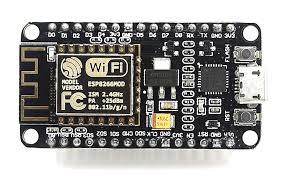
NodeMCU Pinouts
For the past year, I have been using a tiny board, known as the NodeMCU which is essentially a developer board for a module know as the ESP8266. The NodeMCU is formed by an ESP12E, which still has an ESP8266EX inside it.
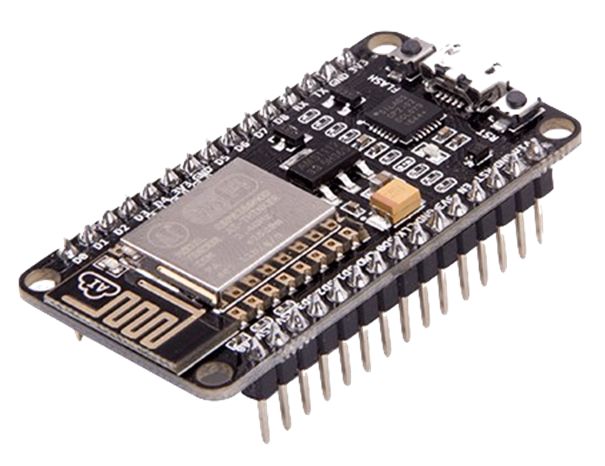
This device is really nice to work with, it is supplied preconfigured with a Micro USB input, for both programming and power.
The term NodeMCU usually refers to the firmware, while the board is called Devkit. NodeMCU Devkit 1.0 consists of an ESP-12E on a board, along with a voltage regulator, a USB interface.